ICE Vibro Hammer Standards &
Global Efficiency Benchmarks 2026
“ACHIEVING PLUG AND PLAY SYNERGY IN COMPLEX GEOTECHNICAL ENVIRONMENTS”
“Modularity in 2026 foundation engineering is the primary driver of ROI. By aligning ICE vibration standards with precision hydraulic fleet integration, contractors can achieve consistent energy transfer across diverse global strata.”
01. Modular Design Principles of High Frequency Systems
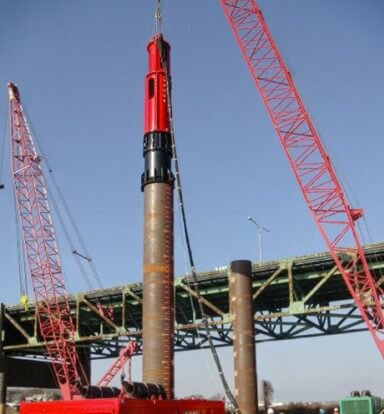
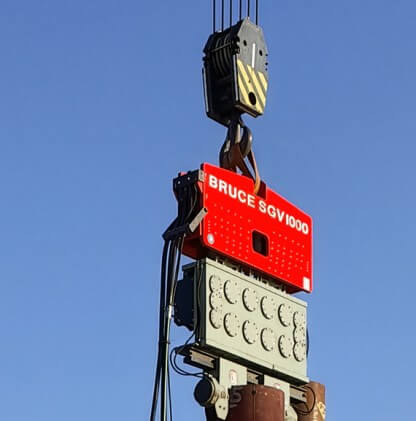
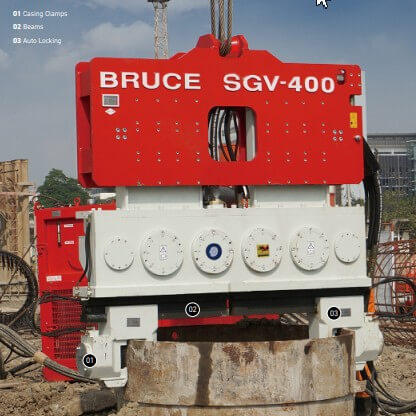
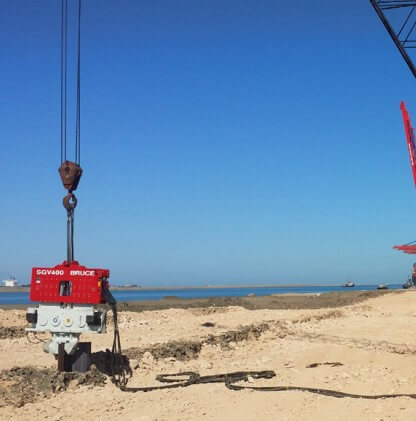
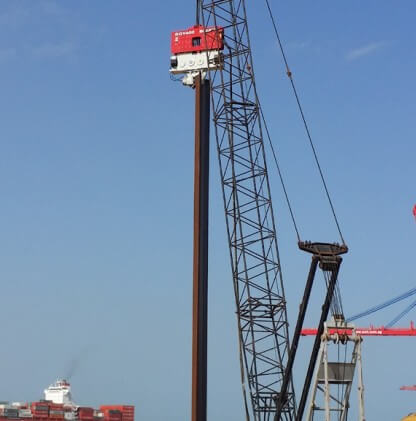
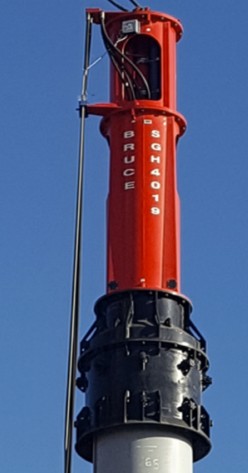
The ICE vibro hammer modularity has set the 2026 industry standard for attachment engineering. In modern foundation projects, the ability to switch between different clamping heads — ranging from single sheet pile jaws to double-clamp casing protectors — is a critical operational advantage. This modularity allows contractors in the United States and United Kingdom to utilize a single vibratory unit for diverse tasks, from urban shoring to maritime jetty construction.
BRAND COMPARISON AUDIT
How do these standards influence global brand rankings? Review the Best Vibratory Hammer Brands 2026 User Reviews & Ratings.
Technical specifications verified by the Deep Foundations Institute (DFI) highlight that modular vibratory systems maintain a higher Energy Transfer Ratio (ETR) across varying pile masses. Unlike pre-owned assets where modular interfaces often suffer from hydraulic “slop” or mechanical wear, new ICE-standard equipment ensures that maximum centrifugal force is delivered to the pile head, satisfying the most rigorous geotechnical audits.
02. Optimizing Hydraulic Power Density for International Fleets
To achieve a seamless “Plug and Play” experience with high-frequency ICE vibro hammer systems, owners must audit the hydraulic power density of their carrier. High-frequency oscillation requires a constant flow (GPM) with zero backpressure. Professional equipment services now focus on installing dedicated case drain lines and flow-priority valves to ensure the hammer’s hydraulic motor operates at peak efficiency.
The risk of integrating used, non-verified units into a 2026 fleet is the high probability of hydraulic contamination. Legacy units often carry metal particulates that can damage an excavator’s main pump. By investing in new factory-calibrated assets, you maximize penetration speed and mechanical longevity, ensuring that your fleet remains mobile and productive across global shoring projects.
03. Global Compliance: ASTM D4945 & BS EN 12699
International shoring firms require equipment that meets the stringent ASTM D4945 (US) and BS EN 12699 (UK) engineering codes. Any high-performance vibro hammer destined for these markets must be backed by factory-verified compliance logs. Our 2026 support model ensures that all export-ready assets are calibrated for regional safety ordinances.
“We focus exclusively on NEW machinery because used equipment cannot provide the verifiable energy transfer data mandatory for modern federal bridge and rail infrastructure audits.”
How to Integrate a High Performance Vibro Hammer
1. AUDIT COUPLER PIN DIMENSIONS
Measure the bucket pin diameters and arm width precisely. Ensure the mounting bracket is rated for the dynamic eccentric forces generated during high-frequency operation to prevent structural boom cracks.
2. ESTABLISH ZERO BACKPRESSURE DRAINAGE
Connect the hammer’s case drain directly to the carrier’s hydraulic tank. This is critical to prevent hydraulic seal failure — a common failure point in poorly configured equipment setups.
3. CALIBRATE THE AUXILIARY FLOW VALVES
Synchronize the excavator’s flow settings (GPM) with the hammer’s motor specs. Over-flow causes cavitation, while under-flow leads to stalling in dense soil strata like London Clay.
Technical FAQ
Q: What is the difference between a vibro hammer and a hydraulic pile hammer?
“A vibro hammer uses high-frequency vibration to reduce soil friction. A hydraulic pile hammer delivers direct impact blows to drive piles into hard ground.”
A vibro hammer works by generating centrifugal force through rotating eccentric weights. This temporarily liquefies the friction between the pile and surrounding soil, allowing the pile to penetrate under its own weight and the hammer’s downforce. It is fast, low-noise, and well-suited for sandy or loose soils. A hydraulic pile hammer, by contrast, lifts a ram and drops it onto the pile head. The percussive impact creates a stress wave that overcomes skin friction and end-bearing resistance in stiff clay, dense gravel, and hard bedrock. For projects involving both soil types, engineers typically use a vibro hammer for the initial penetration phase and a hydraulic impact hammer to achieve final set and bearing verification.Q: How do I select the right vibro hammer size for my project?
“The centrifugal force of the hammer should be at least 15 times the pile weight — this is the fundamental selection rule.”
Three parameters define vibro hammer selection: eccentric moment, centrifugal force, and operating frequency. Eccentric moment determines the amplitude of vibration — the physical displacement of the pile during each cycle. Centrifugal force determines penetration capability through the soil. Frequency affects how efficiently the soil liquefaction state is maintained at depth. For light sheet piling in medium-dense sand, a smaller unit with moderate centrifugal force is sufficient. For heavy steel casing piles in dense marine seabed conditions, a high-capacity model with large eccentric moment is required. Always match the hammer to your host machine’s hydraulic output — auxiliary flow (lpm) and operating pressure (bar) must align with the hammer’s motor demand to prevent cavitation and frequency decay on site.Q: Can a vibro hammer extract piles after installation?
“Yes — pile extraction is one of the key advantages of a vibratory hammer over an impact system.”
Vibratory hammers can both drive and extract piles. During extraction, the hammer clamps onto the pile head and vibrates while the crane applies upward line pull. The vibration temporarily reduces skin friction along the pile shaft, allowing the pile to be drawn back out of the ground. This makes vibro hammers the standard choice for temporary works such as cofferdams, sheet pile shoring, and trench support — where piles must be removed and reused after construction. Hydraulic impact hammers are designed for downward driving only and cannot perform extraction.Q: Is it possible to swap jaws between U-piles and Z-piles on site?
“Yes — modular clamp systems allow jaw changes on site without major disassembly.”
High-performance modular vibratory units allow for jaw swapping between different sheet pile profiles including U-piles, Z-piles, and flat plates. The clamp body remains mounted to the hammer while only the jaw inserts are changed. This versatility is particularly valuable on projects where multiple pile profiles are required across different phases of construction. Universal clamps cover a wide range of pile geometries, while specialized casing clamps are available for round pipe and casing piles. Confirming jaw compatibility with your specific pile profile before mobilization eliminates unnecessary downtime on site.