Vibratory Hammer Commissioning Checklist: Setup, Handover & Daily Checks
- Match the delivered equipment to the approved configuration and documentation.
- Assign installation, testing, training and acceptance responsibilities.
- Record model-specific limits and commissioning measurements.
- Resolve outstanding defects before releasing the equipment for production.
1. Agree on the commissioning scope before shipment
Clarify who installs the equipment, who verifies the hydraulic supply, who provides operator familiarization and who authorizes the start of production. If a supplier technician will attend the site, agree on the required carrier, lifting equipment, working area and supporting personnel before the visit.
Confirm which documents must accompany the equipment. These may include the operating and maintenance manuals, hydraulic diagrams, installation drawings, parts information and any inspection or conformity documentation applicable to the supplied system and project.
2. Check equipment identity and delivery condition
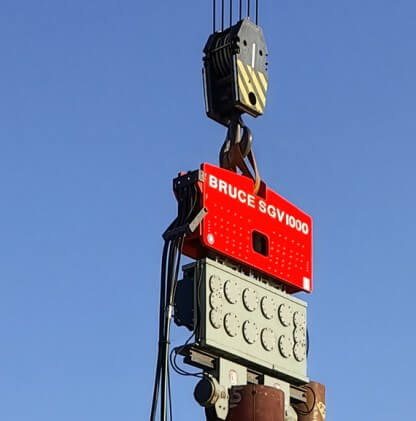
Record the hammer, clamp and power-source model and serial numbers. Compare the delivered components with the quotation and approved configuration. Photograph identification plates and any visible transport damage before installation.
Check whether the hose set, controls, adapters and supplied accessories match the packing list. Missing components should be recorded as outstanding items rather than replaced with unapproved alternatives to keep the programme moving.
| Commissioning stage | Evidence to record | Release condition |
|---|---|---|
| Document review | Applicable manuals, drawing revisions and approved equipment configuration. | The team has the instructions for the actual supplied system. |
| Delivery inspection | Serial numbers, packing-list check, damage photographs and missing items. | Equipment condition and scope discrepancies are resolved. |
| Mechanical installation | Mounting, clamp, lifting and connection checks required by the manuals. | Installation has been reviewed by the responsible qualified personnel. |
| Hydraulic verification | Required circuit checks, measured values, test conditions and permitted limits. | Results meet the applicable manufacturer requirements. |
| Functional checks | Control and protective-function checks performed under the approved procedure. | Required functions operate correctly and defects are closed. |
| Site trial | Equipment configuration, pile details, observations and monitoring results. | The trial meets the agreed equipment and project acceptance criteria. |
| Handover | Training record, inspection schedule, spare-parts information and outstanding items. | Responsibilities and operating restrictions are understood and recorded. |
3. Verify installation before energizing the system
The installation review should cover the mounting arrangement, clamp compatibility, hose routing, connections and the approved carrier or suspension configuration. The responsible team should also confirm the working platform, operating area and exclusion arrangements required by the site plan.
Hydraulic checks should use the actual model’s requirements for fluid, filtration, supply, return and drain arrangements. Record who completed the checks and which documents or measurements support acceptance.
Do not improvise startup tests, run conditions, clamp settings or pressure adjustments from a generic checklist. Before inspection or maintenance, follow the specified isolation and stored-energy procedures. Never use hands to search for hydraulic leaks.
4. Record the first controlled trial
Carry out the trial using the approved method and under the supervision required for the equipment and site. Record the pile profile and length, equipment configuration, location, operating observations and any project monitoring data.
The purpose is to establish whether the installed system operates within its specified limits and whether the proposed method is suitable for the trial conditions. A short successful trial does not establish productivity across different ground conditions or prove the final capacity of a foundation pile.
If abnormal noise, leakage, unexpected movement, clamp issues or warning indications occur, stop the test in accordance with the approved procedure and investigate before continuing. Record the fault, corrective action and subsequent acceptance decision.
5. Create a clear handover record
- Equipment identification and approved configuration.
- Applicable operating documents and revision dates.
- Completed checks and recorded test results.
- Operator familiarization and responsible personnel.
- Unresolved items, restrictions and corrective-action owners.
- Maintenance schedule, parts references and service contact details.
Keep the commissioning record accessible to the operator, maintenance team and project supervisor. If the hammer is transferred to another carrier or substantially reconfigured, review which compatibility and commissioning checks must be repeated.
6. Use a model-specific daily inspection sheet
Daily checks should follow the operating manual and site procedure. A useful record identifies the equipment, date, operating hours, inspector and any defects found. Include the components and conditions specified by the manufacturer, such as visible hose condition, mounting security, clamp condition, lubrication or fluid checks and warning indications.
Inspection intervals and acceptance limits vary between machines. Do not replace the manufacturer’s schedule with a generic daily list. Defects affecting safe operation should be referred to the responsible person and resolved before the equipment returns to service.
7. Prepare the right documents for support
When requesting technical support, provide model and serial numbers, operating hours, photographs, fault indications and the relevant commissioning or maintenance record. Describe when the issue occurs and whether the carrier, hydraulic circuit or pile configuration has changed.
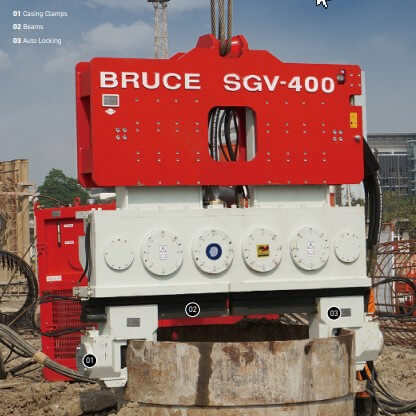
The BRUCE brochure catalogue can help identify the equipment family. Obtain the applicable operating and commissioning instructions for the actual model directly from the supplier; a brochure is not an operating manual.
Frequently asked questions
Does this checklist replace the operating manual?
No. It helps organize commissioning records and responsibilities. The manufacturer’s model-specific instructions govern installation, testing, operation and maintenance.
Does a successful trial confirm pile capacity?
No. Equipment commissioning and geotechnical acceptance serve different purposes. Follow the project engineer’s specified pile acceptance and verification requirements.
Should checks be repeated after changing excavators?
Review the new installation with the equipment manufacturers. A different carrier can change hydraulic performance, mounting, controls and handling conditions, requiring renewed verification.
Confirm commissioning requirements before delivery
For a BRUCE equipment enquiry, provide the proposed model, carrier or power pack, installation location and required support scope. Ask which documents and site preparations are needed.
Ask BRUCE / PowerQuip About Commissioning