Vibro Hammer Cost Price Guide:
2026 New Asset Procurement Strategy
“DECODING THE ECONOMICS OF NEW HIGH-FREQUENCY PILING IN GLOBAL MARKETS”
01. 2026 New Vibro Hammer Market Dynamics
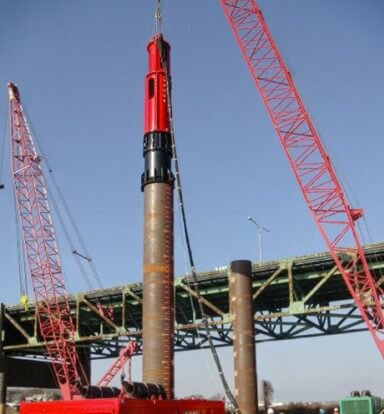
In 2026, the vibro hammer has become a critical asset for rapid deep foundation installation. The current cost price for new equipment reflects a market responding to coastal resilience projects in the United States and high-speed rail expansions in the United Kingdom. Consequently, understanding what drives the total acquisition cost is essential before committing to procurement.
Planning a large-scale project bid?
Review our Master Bidding Strategy & Global Cost Estimate Guide.
What Drives the Cost Price of a New Vibro Hammer
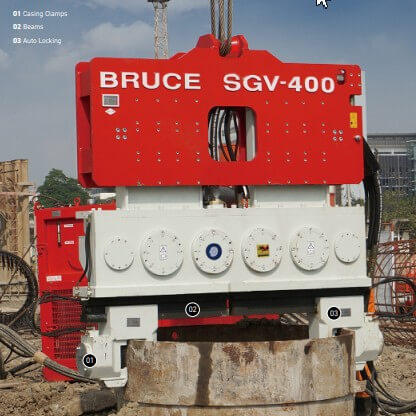
The cost price of a new vibratory hammer reflects the precision engineering of its core components — the gearbox, eccentric weights, suppressor assembly, and hydraulic motor. Furthermore, the matched PQ-V series power pack, clamp type, and hydraulic hose bundle are integral parts of the complete working package and must be specified at order stage. A quote that excludes any of these items does not represent the true total cost of ownership and leads to scope inflation during project execution.
SGV Series — Model Range and Cost Considerations
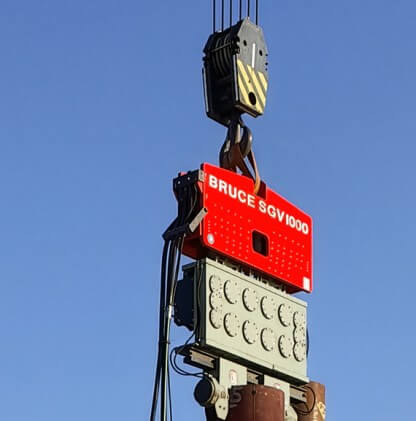
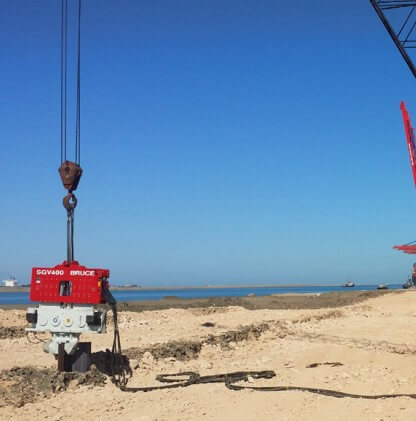
The SGV crane-suspended series spans eccentric moments from 11.5 kgm (SGV-80) to 220 kgm (SGV-2000) and centrifugal forces from 510 kN to 4,610 kN. As centrifugal force and hydraulic power requirement increase across the model range, the cost price scales accordingly. Additionally, excavator-mounted models (SGV-40, SGV-60, SGV-80E) carry a different cost structure as they connect directly to the host machine’s hydraulic supply without a separate power pack — reducing total procurement cost but requiring carrier hydraulic compatibility confirmation before order.
02. Cost Price Factors: Technical Value Drivers
What dictates the cost price of a new vibro hammer? The primary drivers are eccentric moment, centrifugal force, hydraulic power requirement, and the engineering quality of the suppressor and gearbox assemblies. In the abrasive clays of Texas or the over-consolidated strata of London, a machine with inferior gearbox precision causes harmonic drift — frequency drops under load, soil liquefaction collapses, and the pile stalls. New assets ensure that the energy transfer remains at factory specifications, protecting both pile integrity and project schedule.
Gearbox Engineering — The Core Cost Driver
The gearbox is the highest-cost component in a vibratory hammer. Precision-machined alloy steel eccentrics and synchronized gears are designed for extended service life when properly maintained. Field documentation from BRUCE SGV deployments records gear service life exceeding 20 years with correct maintenance — a direct reflection of the manufacturing quality built into the cost price. Furthermore, the clamp cylinder’s built-in check valve — which maintains clamping pressure even in case of hose damage — is a design feature that prevents pile drop and unplanned site stops, protecting project schedules.
Suppressor Elastomers — Isolation Quality and Consumable Cost
The suppressor assembly’s elastomer rubbers are the primary vibration isolation component. High-grade elastomers with mechanical stops — as used in BRUCE SGV models — prevent over-stretching during extraction, extending service life and reducing consumable replacement frequency. Additionally, for excavator-mounted models, the suppressor provides a minimum of 90% vibration isolation — protecting the carrier machine from eccentric forces during operation. This isolation quality is a measurable engineering specification that directly affects the long-term cost of ownership.
“A higher initial cost price for new hammers with superior gearbox engineering and high-grade elastomers directly reduces long-term maintenance spend compared to pre-owned alternatives — the gearbox alone can provide over 20 years of service life with correct maintenance.”
How to Estimate the ROI of a New Vibro Hammer
1. MATCH CENTRIFUGAL FORCE TO SOIL AND PILE WEIGHT
Match the eccentric moment and centrifugal force to the soil profile and pile weight. As a documented selection rule, centrifugal force should be at least 15 times the pile weight. Use ASTM D4945 data to ensure the selected model delivers sufficient energy for the project’s design depth. New units provide the verified harmonic stability required for these audits — and for subsequent pile dynamic load testing.
2. AUDIT THE SUPPRESSOR ELASTOMER SPECIFICATION
Evaluate the elastomer block specification against the project’s vibration limits. For UK projects near Network Rail assets, vibration isolation failure can trigger structural damage claims. Confirm that mechanical stops are included in the suppressor design — these prevent elastomer over-stretching during extraction and extend service life, directly reducing consumable replacement costs over the project lifecycle.
3. CONFIRM POWER PACK AND TOTAL PACKAGE COST
A complete vibro hammer package includes the hammer body, matched PQ-V power pack, clamp type, and hose bundle. Consequently, confirm all four elements are included in the initial cost estimate to prevent scope expansion during procurement. For excavator-mounted models, confirm the host machine’s auxiliary flow (lpm) and pressure (bar) match the hammer’s motor demand — a mismatched carrier is the most common cause of underperformance on first deployment.
04. Regional Compliance: US vs. UK Requirements
US Market — ASTM D4945 and Federal Documentation
In the United States, federally funded bridge and highway projects require high-strain dynamic testing compliance per ASTM D4945. For hydraulic impact hammers on these projects, the optional IEA (Impact Energy Analysis) system records real-time blow energy at every strike — providing the verifiable energy transfer documentation required by DOT structural auditors. Including the IEA system in the cost estimate from the outset consolidates the monitoring requirement into a single procurement and reduces total project cost.
UK Market — BS 5228 Urban Vibration Limits
In the United Kingdom, BS 5228 sets permitted vibration and noise levels for construction operations near existing structures. The suppressor assembly’s elastomer isolation system and the remote pendant’s real-time amplitude control are the two primary technical features required for BS 5228 compliance submissions. Furthermore, all BRUCE hydraulic components are compatible with biodegradable hydraulic oils — meeting UK Environment Agency permit conditions for piling near watercourses without post-procurement modification.
ISO 9001 — The Manufacturing Quality Standard
Equipment manufactured under ISO 9001 certified quality management — as BRUCE has maintained since 2004 — provides procurement teams with an independently verified quality benchmark. This certification covers the full manufacturing process from gearbox assembly and eccentric weight machining through to hydraulic circuit testing. Consequently, the cost price of ISO 9001 certified equipment reflects verified manufacturing standards, not theoretical performance claims.
Procurement & Technical FAQ
Q: What factors determine the cost price of a new vibro hammer?
“The primary cost drivers are eccentric moment, centrifugal force, hydraulic power requirement, gearbox engineering quality, and the matched power pack specification.”
Larger centrifugal force models require higher-capacity hydraulic motors, matched PQ-V power packs with greater engine output, and more robust gearbox assemblies — all of which contribute to the cost price. Additionally, clamp type selection, hose bundle length, and optional compliance equipment such as the IEA system affect the total package cost. A complete quote must include all these elements to reflect the true cost of ownership.Q: How does centrifugal force selection affect the cost price?
“Higher centrifugal force requires a larger eccentric moment, a more powerful hydraulic motor, and a matched higher-output power pack — all of which increase the total acquisition cost.”
As a selection rule, centrifugal force should be at least 15 times the pile weight. Consequently, over-specifying for lighter sheet pile work wastes capital on capacity that will never be used. Conversely, under-specifying for dense offshore conditions leads to pile stall and unplanned downtime that costs more than the marginal price difference between adjacent models.Q: What is included in a complete vibro hammer cost package?
“A complete package covers the hammer body, matched PQ-V power pack, clamp type (Universal or Casing), hose bundle, and remote control pendant — all confirmed at order stage.”
Optional additions include the IEA energy monitoring system for ASTM D4945 compliance, biodegradable hydraulic oil specification for environmental permits, and technical commissioning support. Furthermore, CIF or FOB shipping terms are confirmed at order stage — providing a transparent landed cost calculation for project budget submission.Q: Why does new vibro hammer equipment have a higher cost price than pre-owned alternatives?
“New equipment reflects factory-certified manufacturing quality, verified hydraulic specifications, and a known consumable parts schedule — all absent in pre-owned alternatives.”
Used units carry undocumented gearbox wear, degraded elastomers, and hydraulic contamination that are undetectable without full disassembly. These defects surface under operational load — causing harmonic drift, pile stall, and unplanned downtime that erodes project margins. The cost price of new equipment, by contrast, provides predictable performance from the first day of operation.