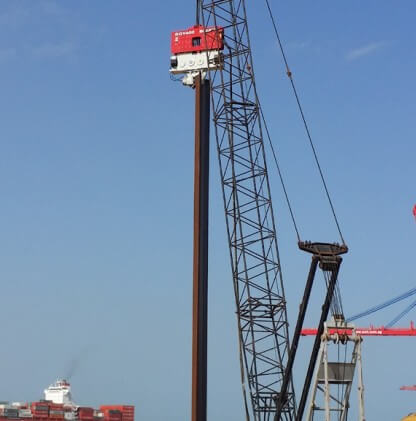
Vibro Hammer Piling for Pilbara Port Infrastructure: WA Contractor Guide 2026
Cyclone season planning, marine sheet pile selection, and EPBC Act field compliance for Western Australian export port projects
Why Pilbara Port Piling Is a Distinct Engineering Environment
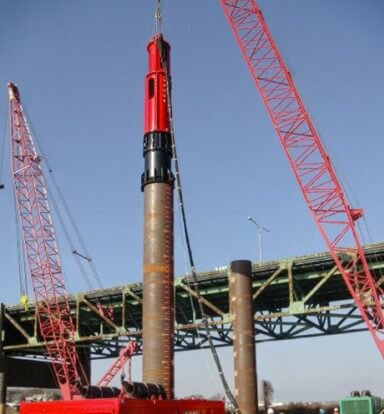
The Pilbara coast of Western Australia hosts the world’s largest bulk export port system. The Port of Dampier and the Port of Port Hedland, both operated by Pilbara Ports Authority, together handle the majority of Australia’s iron ore trade and a significant share of the world’s seaborne iron ore volume. Expansion and maintenance works at these ports — wharf extensions, tug berths, causeway piling, and conveyor trestle foundations — depend on sheet pile and steel casing installation carried out in one of the most logistically remote and climatically demanding coastal environments in the world.
Marine piling contractors working in the Pilbara operate under a compressed weather window. The region’s cyclone season, typically running from November through April, regularly forces work stoppages and equipment lockdown across the Dampier Archipelago and the Port Hedland approach channel. A vibratory hammer that achieves consistent penetration rate from day one of mobilisation — without a commissioning delay or hydraulic fault requiring parts flown in from outside the region — is a direct driver of whether a piling package finishes inside the dry-season construction window.
Soil and Marine Conditions Along the Pilbara Coast
Nearshore and intertidal soils around Dampier, Port Hedland, and the Ashburton and Cape Preston port developments typically present a layered profile of loose to medium-dense calcareous sand and silt over weathered basement rock or stiff residual clay, with local variation driven by the region’s Archaean granite and greenstone geology. Calcareous marine sands are prone to particle crushing under high-frequency vibration, which can reduce the effective friction angle during driving and requires the operator to manage amplitude carefully to avoid over-driving through the loosest surface layers before the pile reaches denser material at depth.
The baseline vibratory hammer selection rule — centrifugal force at least 15 times the pile weight — is the starting point for Pilbara marine piling, but the presence of weathered rock or cemented calcarenite at shallow depth in several Pilbara port locations frequently requires an upward adjustment, or transition to a hydraulic impact hammer for final set once vibratory penetration reaches practical refusal. Confirming the geotechnical profile at each berth location before mobilisation — rather than relying on a single regional soil assumption — is standard practice for Pilbara port piling packages, given how quickly the profile changes between adjacent berth pockets.
Cyclone Season, Tidal Range, and the Working Window
Pilbara ports experience some of the largest tidal ranges in Australia — exceeding 6 metres at Port Hedland during spring tides — which directly affects marine piling barge operations, working platform access, and the submersion depth a vibratory hammer must operate through during each tide cycle. A power pack with sufficient hydraulic output reserve to maintain operating frequency under the increased resistive load of tidal submersion is a practical requirement rather than an optional specification for Pilbara wharf piling.
Cyclone risk additionally shapes the construction programme. Contractors typically plan marine piling mobilisation for the April to October dry season, with contingency built in for early or late-season cyclone activity that can force barge evacuation and temporary suspension of in-water works with limited notice. Equipment reliability during this compressed window — including confirmed hydraulic specifications and factory-documented carrier matching before the barge and crane leave port — reduces the risk of losing productive days to preventable commissioning issues rather than weather.
EPBC Act and WA Environmental Approval Requirements
Port and marine infrastructure works in the Pilbara are assessed under the Commonwealth Environment Protection and Biodiversity Conservation Act 1999 (EPBC Act) where matters of national environmental significance are involved, and under the WA Environmental Protection Act 1986 through the state EPA. Many Pilbara port expansions are delivered under long-term strategic environmental assessment programs — such as the framework covering major iron ore exporters’ Pilbara operations — which set out standing environmental management conditions that individual piling packages must operate within, including turbidity limits, underwater noise thresholds relevant to marine fauna, and marine water quality monitoring during in-water works.
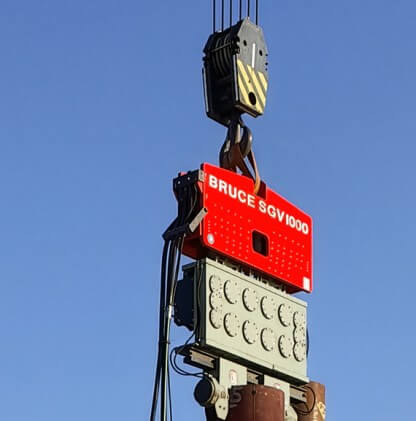
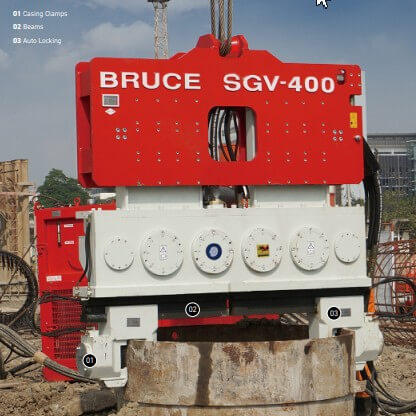
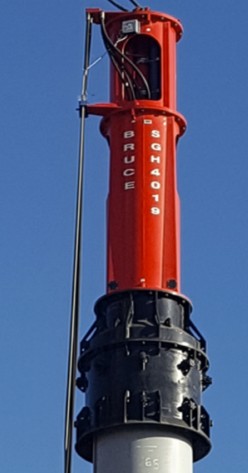
Vibratory hammers generate substantially lower underwater acoustic pressure than impact hammers, which is a material advantage for Pilbara marine piling contractors managing compliance with underwater noise conditions attached to EPBC and WA EPA approvals — particularly given the presence of listed marine species, including turtles and dolphins, in Pilbara coastal waters. All BRUCE SGV hydraulic components are compatible with biodegradable hydraulic oils, addressing the marine pollution prevention conditions that typically apply to in-water plant operating within port limits and adjacent marine protected areas.
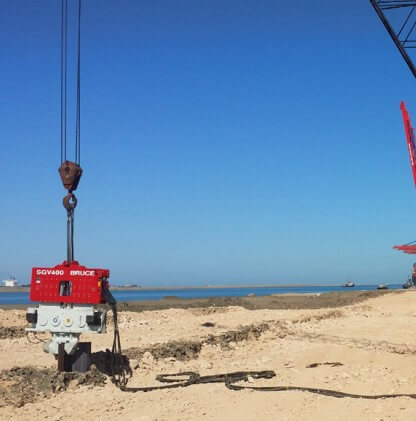
Full technical specifications for the SGV crane-suspended and excavator-mounted series are available at powerquip.co.kr/products/vibro-hammer/features-2/.
Remote Site Logistics and Equipment Reliability
Distance is a defining factor in Pilbara port project economics. Dampier and Port Hedland sit more than 1,500 kilometres from Perth by road, and spare parts or specialist technician call-outs for underperforming equipment carry lead times measured in days, not hours. This logistics reality makes new, factory-calibrated equipment with documented hydraulic specifications a lower-risk procurement choice than pre-owned units with unverifiable maintenance history for Pilbara marine piling packages, where an unplanned equipment failure mid-tide-window can cost a full shift of barge and crane hire regardless of the underlying repair cost.
For pre-mobilisation technical consultation, model selection against your Pilbara berth soil data, and EPBC/EPA documentation support, contact the BRUCE engineering desk at powerquip.co.kr/contact-us/.
Pilbara Port Piling FAQ
Q: What tidal range should be accounted for when specifying a vibratory hammer for Pilbara port piling?
Port Hedland experiences spring tidal ranges exceeding 6 metres — one of the largest in Australia. This affects working platform access and the hydraulic load on the hammer during submersion, requiring a power pack with sufficient output reserve to maintain frequency across the full tide cycle.
Q: How does cyclone season affect the Pilbara marine piling construction window?
Cyclone season typically runs November through April. Most marine piling mobilisation is planned for the April to October dry season, with contingency for early or late-season cyclone activity that can force barge evacuation with limited notice.
Q: What environmental approvals apply to marine piling at Pilbara ports?
Works are assessed under the Commonwealth EPBC Act where matters of national environmental significance apply, and under the WA Environmental Protection Act 1986 via the state EPA. Conditions typically include underwater noise limits, turbidity limits, and marine water quality monitoring.
Q: Why is calcareous sand a specific challenge for vibratory pile driving in Pilbara marine soils?
Calcareous sand particles are prone to crushing under vibration, which can reduce effective friction angle during driving. Operators manage amplitude carefully in the upper loose layers to avoid over-driving before the pile reaches denser material or weathered rock at depth.