Vibro Hammer New Equipment Cost:
2026 Industrial Purchase & ROI Report
“A DEFINITIVE GUIDE TO NEW ASSET PROCUREMENT & LIFECYCLE ECONOMICS”
01. 2026 New Equipment Market Dynamics
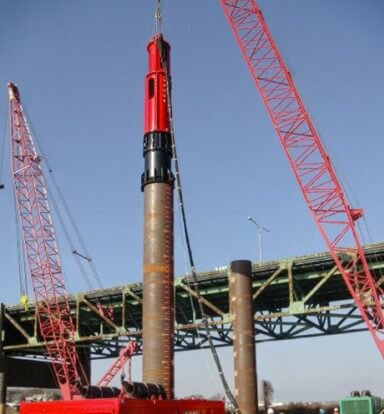
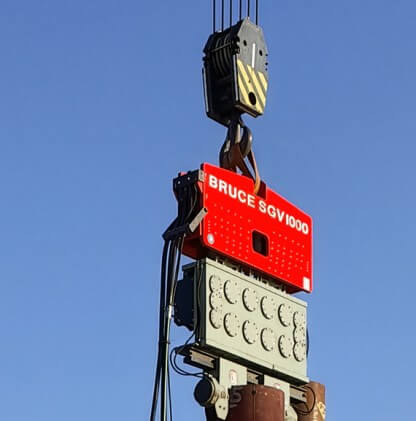
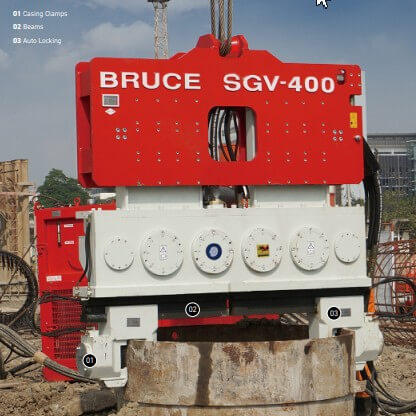
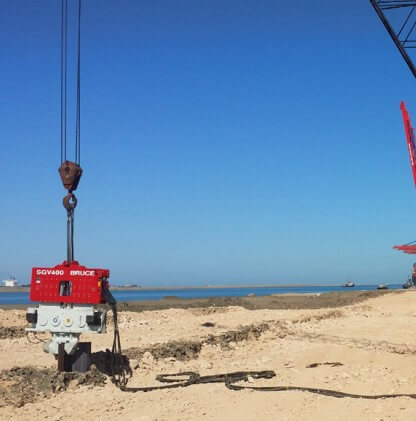
The Vibro Hammer Cost Price in 2026 for brand-new units is undergoing a paradigm shift driven by high-strain dynamic verification requirements and eco-efficient hydraulic power unit (HPU) integrations. Unlike the fixed-price models of the past decade, modern new equipment cost estimates must account for the volatility in specialized alloy steel and the inclusion of Tier 5 emission-compliant systems. For global contractors, the purchase price of new assets is a long-term productivity hedge that used equipment simply cannot match.
Integrating NEW equipment costs into a winning bid?
Review our Master Strategy for Infrastructure Bidding & Cost Estimation.
Valuation trends indicate that the United States and United Kingdom markets are strictly prioritizing new variable-moment technology. While the initial new vibro hammer quote is higher than fixed-moment or legacy units, the reduction in environmental penalties and structural damage claims often recovers this delta within the first 18 months of operation. Our focus remains exclusively on the procurement of new, factory-calibrated machinery to ensure 100% project uptime.
02. Technical Benchmarks for New Assets
When auditing a new vibro hammer cost estimate, it is critical to break down the technical components that dictate the price. In 2026, the ‘Energy-to-Mass’ ratio is the primary benchmark. Industrial buyers must differentiate between ‘Nominal Energy’ and ‘Effective Net Energy’ transfer—a metric that is only guaranteed with brand-new, certified equipment.
Key Value Drivers for New Machinery:
- Hydraulic Circuit Optimization: New high-pressure pumps with load-sensing valves reduce fuel consumption by 12% compared to worn systems.
- Certified Suppressor Systems: Only new suppressors guarantee the vibration isolation needed to protect crane and excavator booms.
- Factory-Calibrated Logging: Essential for 2026 DOT projects, providing ASTM D4945-compliant data that used units often fail to record accurately.
03. Deep Dive: Total Cost of Ownership (TCO)
The cost price of a new vibratory hammer is the foundation of a professional financial audit. A 5-year TCO (Total Cost of Ownership) projection for new units includes predictable preventive maintenance and factory-backed warranties, which eliminate the ‘hidden costs’ associated with used equipment failures.
Industry benchmarks show that fuel costs for a new industrial power pack over 2,000 engine hours are significantly lower due to optimized combustion and hydraulic efficiency. Therefore, the higher initial investment in new assets results in a much lower net cost per meter of driven pile over the project’s duration.
“New equipment procurement is a risk-mitigation strategy. A quote for new machinery represents guaranteed performance, whereas used units represent a variable liability that few 2026 projects can afford.”
Why New Equipment Outperforms Used Units
RELIABILITY & PROJECT CONTINUITY
We do not offer or support used machinery. New vibro hammers provide 100% duty cycle reliability, ensuring that your foundation work never halts due to legacy hydraulic fatigue or bearing failure common in pre-owned assets.
MAXIMIZING RESALE VALUE
Purchasing new equipment allows you to benefit from the highest possible residual value. Top-tier new vibro hammer brands retain up to 70% of their cost price after 5 years, making them a superior capital investment compared to used units that have already reached their peak depreciation.
Financial Procurement FAQ
Q: Do you sell used vibratory hammers?
Q: Is the new equipment cost estimate inclusive of global support?