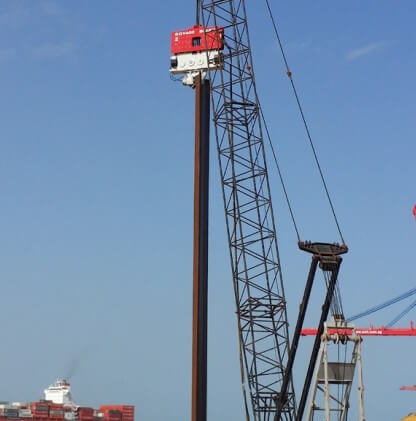
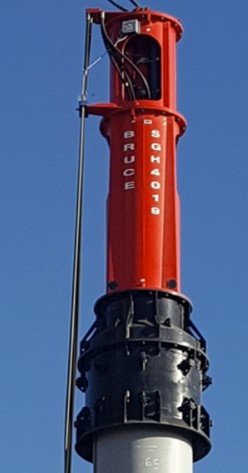
Vibro Hammer vs Hydraulic Impact Hammer: Which Pile Driving Method Fits the Job?
The short answer
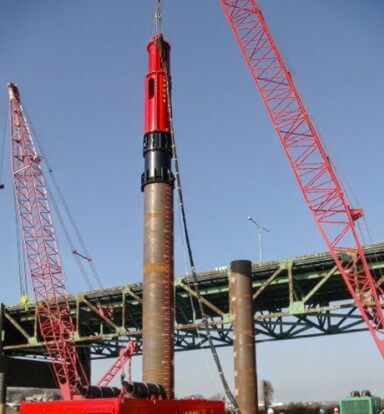
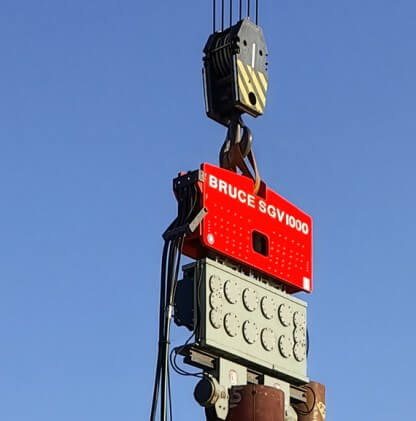
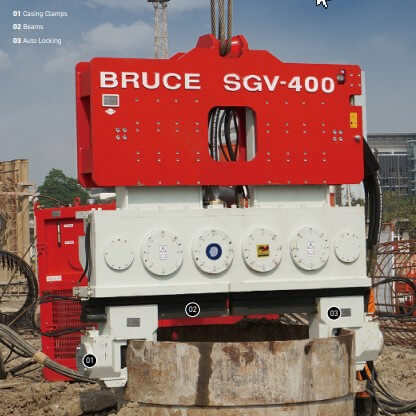
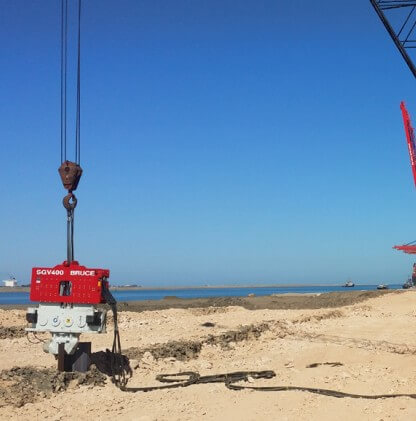
- Vibro hammers use rotating eccentric weights to transmit vibration into the pile and surrounding soil.
- Hydraulic impact hammers deliver repeated controlled blows to drive piles through resistance.
- The correct choice depends on pile type, ground profile, environmental limits, final set requirements and the project method statement.
1. How the two methods work
A vibratory hammer generates centrifugal force through counter-rotating eccentric weights. The vibration can reduce soil resistance around the pile during installation or extraction. A hydraulic impact hammer raises and releases a ram, transferring discrete blows into the pile head. The blow energy, stroke and rate are selected to suit the pile and resistance.
Often effective for sheet piles and certain steel piles where soil response and installation speed support the method.
Often used where piles must penetrate higher resistance or meet defined final driving and capacity criteria.
2. Start with the ground and pile design
Ground conditions should drive the decision. Loose to medium granular soils may respond well to vibratory installation, while dense layers, cobbles, hard strata or a required bearing response may call for impact driving or a combined method. For sheet pile walls, the risk of interlock damage, pile deviation and refusal must be assessed before selecting the primary hammer.
Review boreholes, CPT or SPT data, groundwater, obstructions, pile length, steel grade, section geometry and target toe elevation. A field trial is often the most reliable way to validate productivity assumptions.
Do not choose only by rated force or impact energy
Published values are not directly interchangeable. Hammer efficiency, helmet and pile fit, hydraulic supply, crane capacity, operator technique and site conditions all influence installed performance.
3. Noise, vibration and nearby assets
Vibratory equipment may offer advantages in some urban or marine projects, but it still produces ground-borne vibration. Impact driving can create higher airborne noise and impulsive vibration. Neither method should be selected from generic assumptions alone where buildings, utilities, rail infrastructure or marine receptors are nearby.
Establish project-specific limits, preconstruction surveys, monitoring locations and stop-work triggers. The owner, engineer and contractor should agree on the monitoring method before production begins.
4. Compare the practical selection factors
5. A combined approach is often practical
Many projects do not require an either-or decision. A vibro hammer may be used for initial penetration, pile pitching or extraction, while a hydraulic impact hammer is retained for hard layers, final set or locations where vibration performance is inadequate. The method must be approved and supported by the project’s design and monitoring plan.
✓ Ask suppliers for a system recommendation, not only a machine quote
Share pile drawings, geotechnical data, site access, monitoring constraints and production targets. A useful proposal defines the hammer, clamp or helmet, power pack, lifting arrangement, instrumentation, commissioning and service support.
Frequently asked questions
Is a vibro hammer always quieter than an impact hammer?
Not in every measure or location. Vibro equipment may reduce impulsive noise in some cases but still creates vibration and operational noise that must be evaluated for the site.
Can a vibro hammer achieve final pile capacity?
The answer depends on the pile system, soil and design verification method. Consult the engineer rather than assuming installation speed demonstrates final capacity.
Should a project keep both methods available?
Where soil variability or refusal risk is significant, a contingency method can reduce schedule risk. The decision should be built into the approved installation plan.
Need help selecting vibro or hydraulic impact equipment?
Share your pile type, soil profile, environmental limits and target production requirements to discuss a project-specific equipment package.
Request a Powerquip Equipment Consultation