Vibratory Sheet Pile Hammer for Sale: A Practical Buyer’s Guide
What to evaluate before requesting a quote
- Match the hammer to the sheet pile profile, length, steel grade and installation depth.
- Check the complete system: hammer, clamp, power pack, hoses, crane or excavator interface.
- Compare operating parameters—not only advertised force or price.
- Plan for site access, vibration controls, service support and spare parts.
1. Start with the sheet pile and the ground
Interlocking sheet piles differ in section modulus, clutch geometry, wall thickness and driving resistance. A hammer that performs well on short light sections in granular fill may not have the required grip, energy transfer or lifting arrangement for long heavy sections in dense sand, weathered rock or layered urban ground.
Ask the designer or geotechnical team for pile length, section designation, target toe level, soil profile, obstructions, groundwater conditions and installation tolerances. These inputs are more useful than selecting equipment from a single “tonnage” number.
✓ Buyer’s rule
Select the hammer around the worst credible installation condition—not only the easiest production pile. The contractor should also retain an alternative method if refusal, hard layers or vibration limits become critical.
2. Understand the main hammer specifications
3. Choose the installation configuration
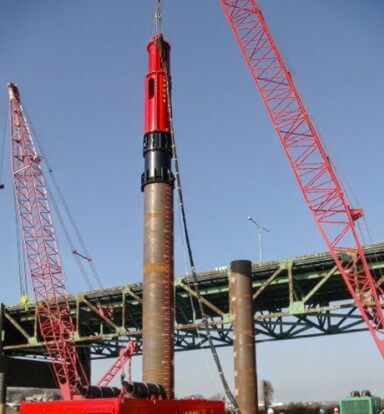
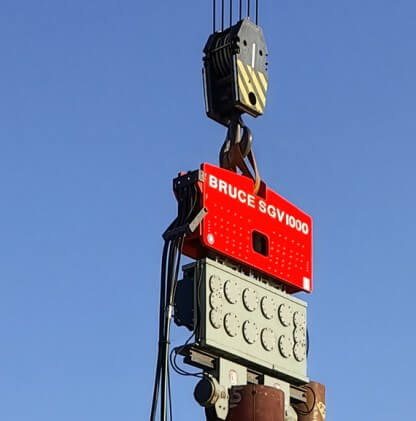
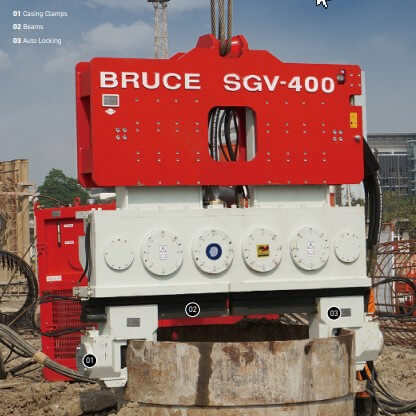
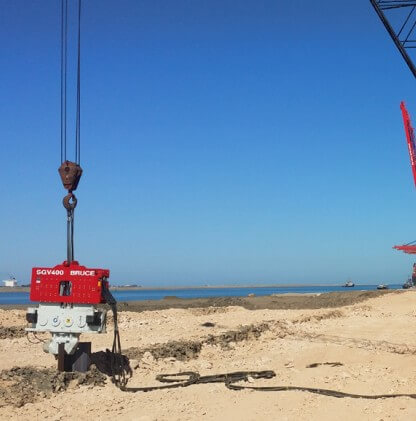
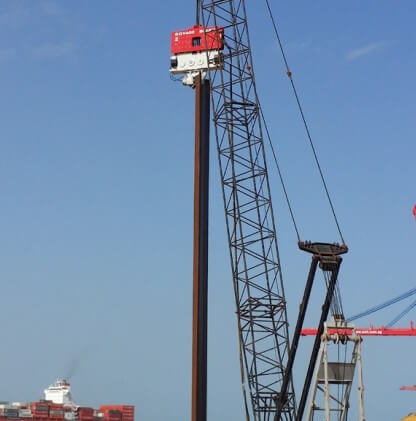
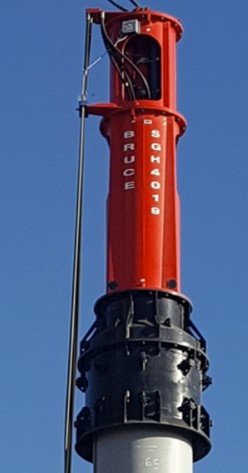
Crane-suspended hammers are common where verticality control, long pile handling and larger power packs are required. Excavator-mounted units can offer mobility on constrained civil sites. Side-grip vibratory hammers are particularly useful for handling and installing sheet piles from the side, including applications where working height or handling sequence is restricted.
Do not compare hammer bodies alone
A quotation should identify the clamp, power pack, control system, hoses, lifting frame, pile handling arrangement, instrumentation and any carrier modifications. Missing accessories can materially affect delivery time, safety and installed cost.
4. Vibration, nearby structures and monitoring
Vibratory installation can reduce some impacts associated with impact driving, but it still creates ground-borne vibration and noise. Projects close to utilities, retaining walls, rail assets, occupied buildings or sensitive equipment may require preconstruction surveys, trial installation, monitoring locations and project-specific limits.
Peak particle velocity is commonly used in monitoring programs, but acceptable values are not universal. The project team should establish limits based on structure condition, distance, soil conditions and owner requirements rather than relying on a generic number.
5. Questions to ask every supplier
6. Build a complete procurement checklist
A well-prepared request for quotation should include pile drawings, expected soil profile, crane or excavator details, site working envelope, target productivity, transport constraints and any vibration or noise requirements. It should also state whether the project needs extraction capability, pile pitching assistance, data logging or remote diagnostics.
Comparing complete scope, support and operating requirements helps prevent a low initial quotation from becoming a higher-cost site problem later.
Frequently asked questions
Can one vibratory hammer install every sheet pile?
No. Pile geometry, ground resistance, installation depth and site constraints must be reviewed together before selecting the system.
Is higher centrifugal force always better?
Not necessarily. Clamp capacity, frequency, amplitude, hydraulic matching, carrier capacity and project vibration limits also affect suitability.
Should I buy or rent?
The decision depends on utilization, fleet strategy, project duration, local service availability and the need for a dedicated configuration.
Need help defining a vibratory sheet pile hammer package?
Share your pile section, soil profile, equipment configuration and project constraints to discuss a suitable vibratory hammer system.
Request a Powerquip Equipment Consultation