Vibro Hammer for Australian Urban Rail Foundation:
2026 Contractor Technical Guide
“SYDNEY, MELBOURNE, AND BRISBANE METRO RAIL SOIL CONDITIONS, STATE RAIL AUTHORITY STANDARDS, AND VIBRATION MANAGEMENT”
01. Australian Urban Rail Investment — The Foundation Piling Pipeline
Australia’s state governments are delivering the largest urban rail infrastructure investment programme in the country’s history, with major metro rail projects underway or in delivery across Sydney, Melbourne, Brisbane, and Perth simultaneously. The Sydney Metro network expansion — including the Metro West line from Westmead to the Sydney CBD and the Metro City and Southwest extension — involves deep underground station construction, cut-and-cover tunnel sections, and elevated viaduct foundations across the inner Sydney urban corridor. In Melbourne, the Metro Tunnel Project (now in operation as the Anzac Metro station precinct) and the ongoing Suburban Rail Loop program involve significant temporary works shoring for underground station excavations in the dense inner Melbourne urban environment. In South East Queensland, the Cross River Rail project and associated station precinct development involves sheet pile and king post retaining wall construction across multiple inner Brisbane station sites.
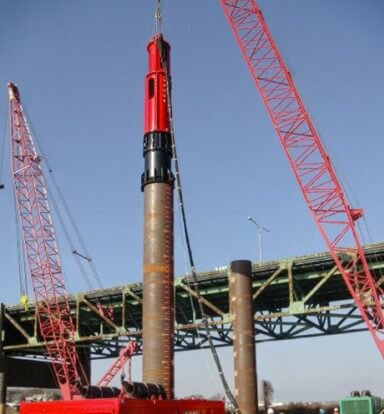
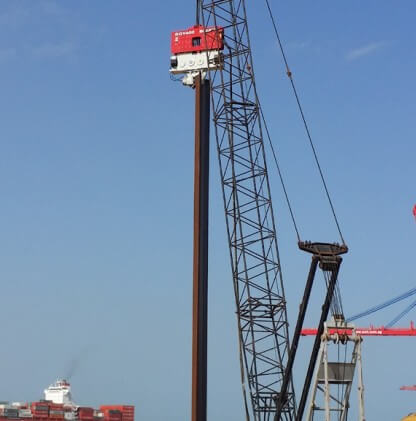
Temporary sheet pile shoring walls are used extensively on Australian urban rail construction projects for station box excavations, cut-and-cover tunnel sections, utility diversion shoring, and construction access cofferdam structures at river and creek crossings on elevated viaduct alignments. The vibratory hammer is the standard installation method for temporary sheet pile shoring on these projects, subject to the vibration monitoring and management requirements imposed by the state rail authority (Sydney Trains, V/Line, MTM, or TMR Queensland Rail) on works adjacent to operational rail infrastructure, and the residential and commercial community noise and vibration constraints that apply across all inner-city Australian urban rail station precincts.
Design and Build Delivery — Piling Contractor Role in Australian Rail Projects
Australian major rail infrastructure projects are typically delivered through alliance or design and construct (D&C) contracts where the principal contractor takes responsibility for temporary works design and installation as part of the overall project delivery obligation. For piling subcontractors engaged on Australian urban rail D&C contracts, the temporary works sheet pile shoring design — typically prepared under AS 4678-2002 (Earth-Retaining Structures) and the project-specific geotechnical design criteria issued by the principal contractor — must be compatible with the vibratory hammer equipment being used for installation. Pre-mobilisation co-ordination between the piling contractor, the temporary works designer, and the principal contractor’s geotechnical engineer to confirm model selection, hammer specifications for inclusion in the temporary works design calculation, and vibration management protocol is standard practice on well-managed Australian urban rail temporary works programmes.
02. Sydney, Melbourne, and Brisbane Urban Geology
The three major Australian urban rail construction markets present distinct geological profiles that require substantially different vibratory hammer configurations for temporary sheet pile shoring installation.
Sydney — Hawkesbury Sandstone at Shallow Depth
Inner Sydney’s geological profile is dominated by Hawkesbury Sandstone — a hard, moderately strong to strong Triassic sandstone that underlies the majority of the Sydney metropolitan area at depths typically ranging from 5 to 20 metres below surface, depending on the local topography and erosion history. For temporary sheet pile shoring on Sydney Metro station construction projects, the sandstone presents a near-surface refusal horizon that limits vibratory pile embedment depth in many inner Sydney locations. Where the design embedment depth for stability extends into the sandstone, alternative temporary works methods — including soldier pile and lagging (king post) walls with rock-socketed soldier pile installation by hydraulic rotary rig — are used in preference to sheet pile shoring that cannot be vibratorily driven into competent rock. In areas where a sufficient depth of residual soil or fill overlies the sandstone to accommodate the required embedment, vibratory sheet pile installation is achievable, but the hammer must be sized for the stiff residual clay and silty sand typically present in the weathered sandstone zone above the competent rock surface.
Melbourne — Coode Island Silt and Basalt
Inner Melbourne’s geology presents two distinct challenges for temporary sheet pile shoring. Along the Yarra River corridor and the inner bay foreshore — the zone traversed by the Metro Tunnel Project and the Suburban Rail Loop alignment through Fishermans Bend — very soft Holocene estuarine deposits known as Coode Island Silt (CIS) are present at depths of up to 15 metres, with very low undrained shear strength (typically 5 to 20 kPa) that requires careful amplitude management to prevent pile deviation during driving and maintain pile verticality in the near-zero resistance upper stratum. Away from the foreshore, Melbourne’s geology transitions to Newer Volcanics basalt — a hard, vesicular to massive lava flow sequence that presents near-surface rock head at depths of 2 to 8 metres across much of the inner northern and western suburbs. In basalt areas, vibratory sheet pile installation is limited to the soil horizon above the basalt surface, which may be insufficient for shoring stability on deeper station excavations, requiring transition to alternative methods as in the Sydney sandstone environment.
Brisbane — Alluvial Sand and Residual Clay
Inner Brisbane’s urban geology along the Cross River Rail alignment presents Quaternary alluvial sand and gravel along the Brisbane River corridor, transitioning to residual clay and weakly weathered sedimentary rock (Neranleigh-Fernvale beds — phyllite, schist, and metasandstone) at depth across the inner suburbs. The alluvial sand horizon along the Brisbane River is well-suited to vibratory sheet pile installation — high penetration rates at moderate centrifugal force, with good pile verticality in the isotropic granular profile. The residual clay horizon away from the river corridor presents higher driving resistance and set-up behaviour similar to Bowen Basin smectite soils, though typically less severe, requiring upward adjustment from the baseline centrifugal force selection for pile embedment into the residual clay formation on Cross River Rail station precinct shoring projects in the inner Brisbane suburbs.
04. Vibration Management Adjacent to Live Rail and Existing Structures
Vibration management for sheet pile installation on Australian urban rail projects operates within a dual regulatory framework — the state rail authority’s track-adjacent vibration limits that protect signalling, track geometry, and overhead wiring assets, and the state EPA or local council construction noise and vibration guidelines that protect neighbouring residential and commercial properties from construction disturbance. In New South Wales, the NSW Environment Protection Authority’s Interim Construction Noise Guideline (ICNG) and the associated vibration management framework set the permitted vibration levels for residential and commercial receivers during construction activities. In Victoria, the EPA Victoria Construction Noise and Vibration Guideline sets equivalent limits. In Queensland, the Department of Environment and Science Environmental Noise Guideline applies. Each of these state frameworks references different trigger levels, measurement methodologies, and community consultation requirements, and the piling contractor must comply with all applicable frameworks simultaneously on urban Australian rail projects.
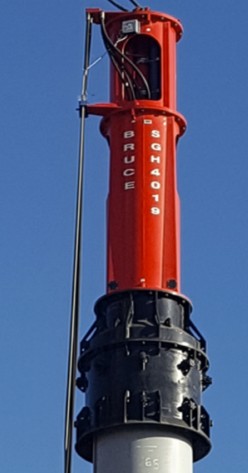
The remote control pendant’s real-time flow adjust function — which allows the operator to proportionally reduce centrifugal force without stopping the vibration cycle — is the primary operational tool for managing compliance with both state rail authority track-adjacent vibration limits and state EPA residential vibration guidelines simultaneously on urban Australian rail shoring projects. This dual compliance requirement — where reducing centrifugal force to satisfy the EPA residential guideline must not drop below the minimum level needed to maintain penetration in the soil profile — is operationally more complex than either compliance requirement in isolation, and requires a hammer with sufficient centrifugal force headroom above the minimum penetration threshold to allow meaningful amplitude reduction for residential vibration management without stalling the pile drive.
Heritage-Listed Buildings and Sensitive Receiver Protocol
Australian urban rail station precincts in Sydney, Melbourne, and Brisbane frequently include heritage-listed buildings on or adjacent to the construction site — Victorian-era commercial buildings in the Melbourne CBD, Federation-era terraces in inner Sydney suburbs, and Queensland timber residential buildings in inner Brisbane — that require specific vibration management protocols beyond the standard state EPA guideline. Heritage building vibration sensitivity assessments, pre-construction condition surveys, and real-time continuous vibration monitoring at the nearest heritage structure are typically specified by the Heritage Council of NSW, Heritage Victoria, or the Queensland Heritage Council as conditions of heritage impact approval for urban rail station construction projects. The party wall and continuous vibration monitoring protocols for Australian heritage building protection are conceptually similar to the Party Wall Act process in the UK, but are implemented through state heritage regulatory frameworks rather than private law agreements, and require piling equipment documentation that satisfies the heritage authority’s technical reviewers as well as the principal contractor’s geotechnical engineer.
For state rail authority approval documentation, heritage building vibration assessment technical inputs, and pre-mobilisation model selection for your Australian urban rail foundation project, contact the BRUCE engineering desk at powerquip.co.kr/contact-us/. Full product technical specifications are at powerquip.co.kr/products/vibro-hammer/features-2/.
Australian Urban Rail Piling FAQ
Q: Why does Sydney’s Hawkesbury Sandstone geology limit vibratory sheet pile embedment depth on Metro station projects?
“Hawkesbury Sandstone is a hard, competent rock that vibratory hammers cannot penetrate — sheet pile embedment is limited to the soil and weathered rock horizon above the competent sandstone surface, which may be insufficient for deep station excavation shoring stability.”
Where sandstone depth is insufficient for sheet pile shoring stability, alternative methods such as soldier pile and lagging walls with rock-socketed soldier piles are used. Pre-design geotechnical investigation confirming sandstone depth across the station box footprint is essential before specifying sheet pile shoring on Sydney Metro projects.Q: What documentation do Australian state rail authorities require before approving vibratory piling adjacent to operational rail infrastructure?
“State rail authorities typically require the hammer’s centrifugal force rating, frequency range, suppressor isolation performance, and remote pendant amplitude control capability — along with a vibration management plan confirming how track-adjacent PPV limits will be maintained.”
BRUCE provides all required technical parameters at inquiry stage. The ISO 9001 certification and documented project references — including the Christchurch Hospital SGV-40 deployment adjacent to MRI equipment — provide technical credibility for state rail authority asset protection approval.Q: How does Melbourne’s Coode Island Silt affect vibratory sheet pile installation on inner Melbourne rail projects?
“Coode Island Silt has very low undrained shear strength — typically 5 to 20 kPa — requiring careful amplitude management to maintain pile verticality in the near-zero resistance upper stratum and prevent pile deviation from the design wall line.”
The remote pendant’s flow adjust allows gradual amplitude increase as the pile gains embedment and begins to self-guide in the CIS. Pre-mobilisation coordination with the temporary works designer to confirm the minimum embedment at which pile self-guidance can be assumed is recommended on projects where the full CIS thickness must be penetrated.Q: How are dual state rail authority and state EPA vibration limits managed simultaneously during vibratory sheet pile installation on Australian urban rail projects?
“The hammer must be sized with sufficient centrifugal force headroom above the minimum penetration threshold to allow meaningful amplitude reduction for residential EPA compliance without stalling the pile drive.”
This dual compliance requirement means that a hammer sized at the minimum centrifugal force for soil penetration alone is not adequate on Australian urban rail projects. Additional centrifugal force headroom — confirmed through pre-mobilisation modelling against the site soil profile and the applicable state framework vibration limits — must be built into the model selection to support real-time amplitude management without compromising penetration rate.