Vibro Hammer Manufacturer:
What to Verify Before You Buy
A practical checklist for distributors, dealers, and importers sourcing vibratory pile driving equipment globally.
When procurement teams and distributors search for a vibro hammer manufacturer, the stakes are high. A vibratory hammer is not a consumable — it is a capital asset expected to perform reliably across multiple projects, variable soil conditions, and years of field operation. Choosing the wrong manufacturer means downtime, cost overruns, and damaged client relationships.
This guide covers what every importer, dealer, and distributor should verify before signing a purchase order — drawn from over 27 years of field experience across projects in the USA, Middle East, Southeast Asia, Europe, and beyond.
1What a Vibro Hammer Manufacturer Actually Makes
A vibro hammer — also called a vibratory hammer or vibratory pile driver — is a hydraulically powered foundation machine that drives or extracts piles using high-frequency oscillation rather than impact force. It is ideal for sandy soils, soft clay, and sheet piling applications where noise and vibration restrictions are in place.
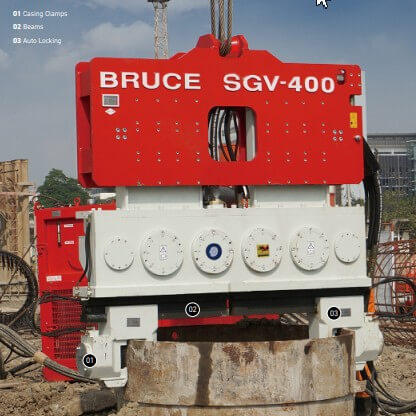
The core components of any vibratory hammer include:
Eccentric Weight Assembly
Generates the centrifugal force that creates downward oscillation. Mass and RPM determine moment output.
Hydraulic Motor
Drives the eccentric rotation. Flow rate and pressure must match the carrier’s hydraulic output precisely.
Suppressor Housing
Isolates vibration from the leader or crane — protects the carrier machine from fatigue damage.
Hydraulic Clamp
Grips the pile head. Clamp force and geometry determine compatibility with H-pile, sheet pile, and pipe pile.
A genuine vibro hammer manufacturer designs and engineers all of these in-house with documented QA processes, material traceability, and factory-verified tolerances. This is fundamentally different from a trading company that purchases assembled units from third-party workshops and resells them under a branded label.
2Manufacturer vs. Trading Company: The Critical Difference
Here is how to tell them apart during initial supplier evaluation:
| Criteria | Real Manufacturer | Trading Company |
|---|---|---|
| Factory inspection | ✅ Open to audit | ❌ Redirects or delays |
| Engineering drawings | ✅ Available on request | ❌ “Proprietary” / unavailable |
| CE / ISO certification | ✅ Original certificates | ⚠️ Often unverifiable copies |
| Spare parts supply | ✅ Consistent, part-numbered | ❌ Long lead times, substitutions |
| Warranty enforcement | ✅ Manufacturer-backed | ❌ Dependent on third-party workshop |
| Technical support | ✅ In-house engineers | ❌ Forwarded to unknown party |
3Product Range: Why Breadth Matters for Distributors
Dealers and distributors serving multiple markets need a manufacturer capable of supplying different machine configurations from a single source. Fragmented procurement — sourcing excavator-mounted units from one factory and crane-suspended units from another — multiplies certification overhead, spare-parts complexity, and support channels.
A credible vibro hammer manufacturer should offer at minimum:
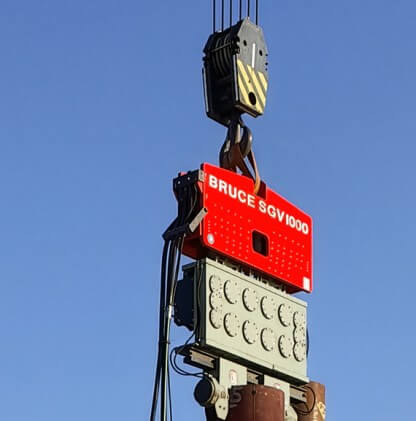
Crane-Mounted Vibratory Hammer
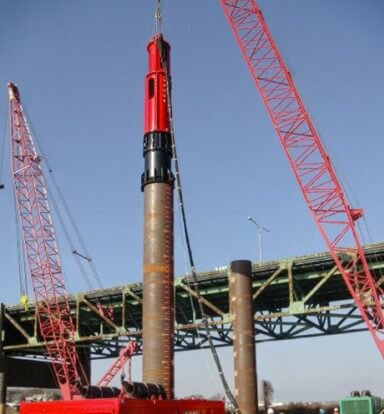
For large-scale sheet piling, bridge foundations, and marine projects requiring high eccentric moment.
Excavator-Mounted Vibro Hammer
Side-grip configuration for low-headroom urban sites and sheet pile extraction with standard excavators.
Hydraulic Power Pack
Self-contained HPU matched to the vibratory hammer’s exact flow and pressure requirements.
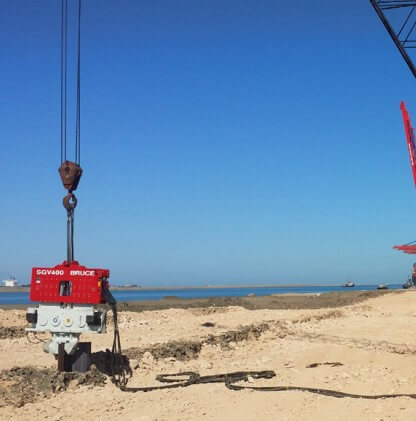
Offshore / Marine Variants
Corrosion-resistant configurations for harbor, coastal, and offshore foundation work.
4Key Technical Specs to Verify Before Placing an Order
Before requesting a quote, confirm these parameters with any vibro hammer manufacturer. Mismatched specs are the number-one cause of warranty disputes and on-site equipment failures.
| Parameter | What to Check | Why It Matters |
|---|---|---|
| Eccentric Moment (kN·m) | Match to pile type and soil | Determines penetration capacity |
| Operating Frequency (rpm) | Standard vs. high-frequency | Noise/vibration compliance in urban zones |
| Hydraulic Flow (L/min) | Must match carrier HPU output | Prevents motor cavitation and failure |
| Max Working Pressure (bar) | Verify against carrier specs | Avoids hose and seal damage |
| Clamp Force (kN) | Match to pile section dimensions | Prevents pile slippage and drop risk |
| Total Weight (kg) | Check crane/excavator lift rating | Safety compliance on site |
5After-Sales Support & Spare Parts Availability
For distributors reselling into markets where local service infrastructure is limited, the manufacturer’s spare parts network is often more valuable than the unit price. Eccentric weight bearings, hydraulic seals, and clamp jaw inserts are high-wear components that need to be available within days, not weeks.
Verify these points with any manufacturer before committing:
- Spare parts catalogue with part numbers Confirms that components are standardized and traceable, not sourced ad hoc from open-market suppliers.
- Stock depth for high-wear items Bearings, seals, and clamp inserts should be held in warehouse inventory, not made-to-order.
- International shipping capability Confirm DDP or DAP shipping terms and export documentation for your target import market.
- Technical support response time A manufacturer with in-house engineers should be able to provide remote fault diagnosis within 24 hours.
- Video / remote commissioning support Critical for importers deploying equipment in countries without local service centers.
- Warranty terms in writing Should specify coverage period, excluded conditions, and the process for claims.
65 Red Flags When Evaluating a Vibro Hammer Manufacturer
These warning signs appear frequently in the procurement process, particularly when sourcing through online B2B directories or unsolicited supplier outreach.
7Your Complete Procurement Checklist
Use this checklist before issuing a purchase order to any vibro hammer manufacturer. Share it with your technical team and procurement manager.
- Factory audit (on-site or video) Confirm production capacity and quality control processes are in place.
- Model-specific technical datasheet Eccentric moment, frequency, flow rate, pressure, clamp force, weight — all documented.
- CE Declaration of Conformity (original) Cross-checked with certifying body registry.
- Project reference list with contact details Minimum 3 verifiable deployments in comparable soil conditions.
- Spare parts catalogue with lead times Especially for bearings, seals, and clamp components.
- Warranty terms in writing Coverage period, claim process, and exclusions clearly stated.
- Export documentation capability CO, packing list, commercial invoice, HS code confirmation.
- Technical support contact (named engineer) Not just a general inbox — a person with field knowledge.
- After-sale video/remote commissioning For remote-market importers without local service infrastructure.
- Distributor / dealer agreement terms If applicable — exclusivity, territory, pricing, and minimum order conditions.
8Frequently Asked Questions
Get a Direct Quote from the Manufacturer
BRUCE Piling Equipment has supplied vibratory hammers and pile driving systems to contractors and distributors across 30+ countries since 1997. Tell us your project specs and we’ll respond within 24 hours.